
The Role of 5G in the Revolution of Industry 4.0
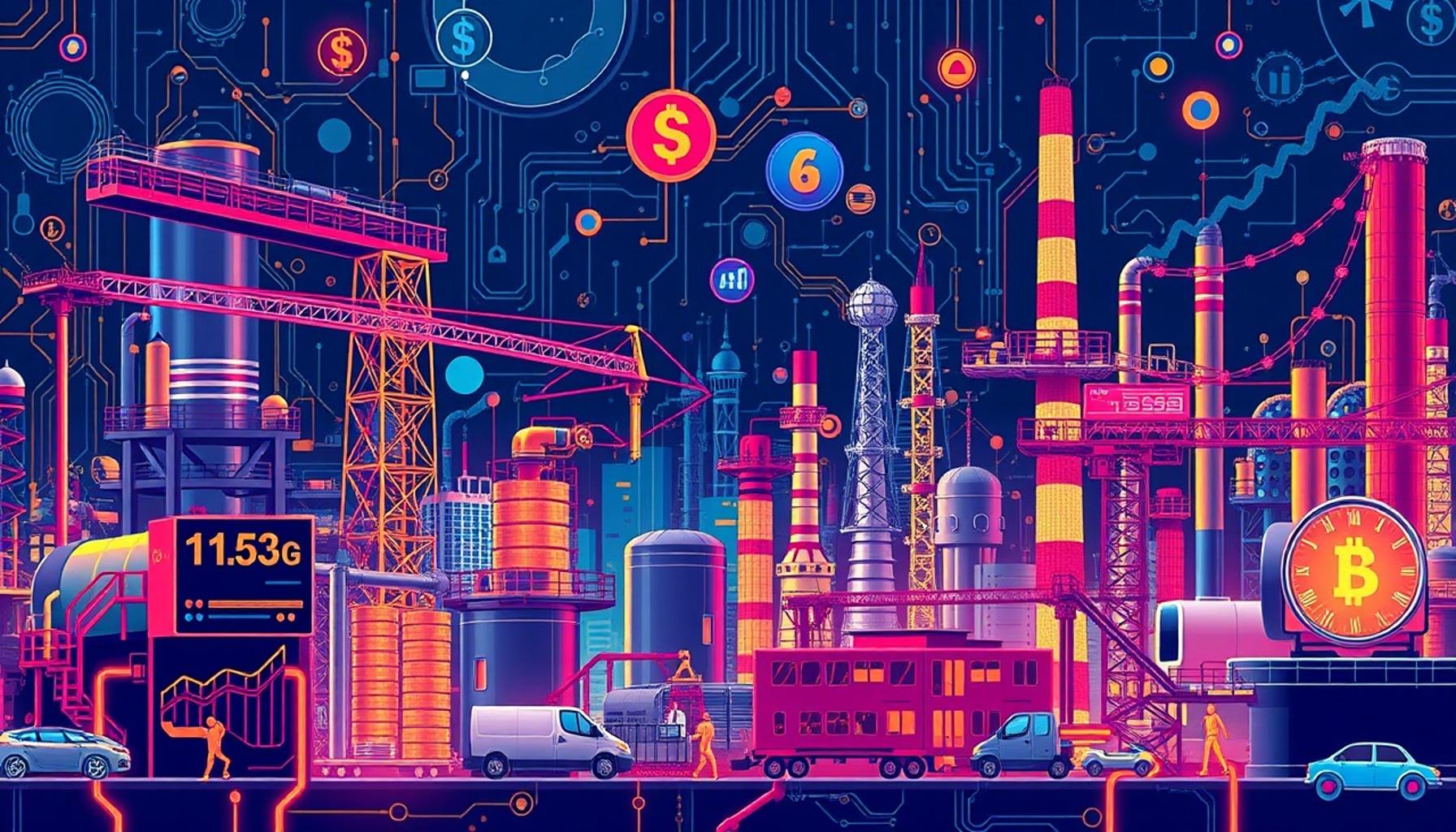
Understanding 5G Technology and Its Industrial Impact
The era of connectivity has reached new heights with the introduction of 5G technology. Beyond just offering fast internet for smartphones, 5G serves as a backbone for the next wave of industrial advancements, known as Industry 4.0. This new industrial revolution is characterized by the integration of digital technologies into manufacturing, leading to increased efficiency, productivity, and innovation.
At the core of Industry 4.0 are several key features of 5G technology, which together foster significant improvements in industrial operations:
- Higher Data Speeds: 5G can achieve speeds up to 100 times faster than 4G, allowing for the rapid transmission of large amounts of data. This is crucial for operations that rely on vast datasets, such as simulations and analytics, which can be conducted in real-time.
- Lower Latency: With latency reduced to less than one millisecond, 5G enhances the speed of response in communication between devices. This facilitates instantaneous interactions among machines, crucial in automated manufacturing environments where timing is critical.
- Enhanced Connectivity: 5G networks can handle a significantly higher number of connected devices per square kilometer compared to previous technologies. This is essential for smart factories, where numerous sensors and equipment constantly communicate with each other.
The implications of adopting 5G technology in manufacturing are already being observed in various real-world applications:
- Smart Manufacturing: Machines equipped with sensors can communicate in real-time to optimize production lines. For example, an assembly line can automatically adjust based on data from previous operations, reducing waste and improving output quality.
- Remote Monitoring: Companies can implement sensors that provide instant notifications for maintenance needs, allowing for proactive responses rather than waiting for a failure. An example of this is using 5G to monitor machinery health remotely, ensuring continuous operational efficiency.
- Augmented Reality (AR): Technicians can use AR glasses that overlay digital information onto physical equipment. This can help in complex repair procedures or during training sessions, making processes safer and faster. For instance, a service technician in the field can receive guidance overlays while performing repairs, significantly reducing errors and training time.
In conclusion, integrating 5G technology into industrial practices is transforming the landscape of manufacturing. It is not merely a technological update; it represents a fundamental shift toward a more connected, efficient, and intelligent future in manufacturing. As industries in the United States and around the world continue to embrace this advancement, the potential for increased productivity and innovation is boundless.
DIVE DEEPER: Click here to discover more about social media’s impact
Transforming Communication and Data Management in Industries
The integration of 5G technology is dramatically changing how industries communicate and manage data. A significant aspect of this transformation lies in the ability of 5G to enable real-time communication between devices, resulting in enhanced efficiency and productivity within manufacturing environments.
One of the primary benefits of 5G is its capacity to facilitate what is known as the Internet of Things (IoT). IoT encompasses a network of interconnected devices that collect and exchange data. In the context of manufacturing, this means that machinery, sensors, and equipment can continuously share data with one another, creating a synchronized environment where information flows seamlessly. This leads to smarter decision-making based on real-time data analytics.
To illustrate this, consider a factory floor equipped with multiple machines that are integrated into a 5G network. Each machine can send performance data to a central system at astounding speeds. The operator can monitor this data through a dashboard, allowing for immediate adjustments to operations. For example, if one machine experiences a dip in efficiency, the system can notify a technician in real-time, leading to swift corrective action that minimizes downtime.
The applications of 5G in this realm are manifold:
- Predictive Maintenance: By utilizing 5G connectivity, manufacturers can employ advanced analytics to predict when equipment is likely to fail. Sensors fitted on machines monitor various parameters, such as temperature and vibration, sending data continuously to maintenance systems. This proactive approach prevents costly downtime and extends the lifespan of equipment.
- Supply Chain Optimization: 5G’s enhanced data handling capabilities allow companies to track inventory levels in real time. For instance, sensors can be placed on logistics vehicles, giving manufacturers constant visibility over their supply chains. They can respond quickly to changes in demand, ensuring products are delivered promptly without excess inventory.
- Flexible Manufacturing Systems: As market demands change rapidly, manufacturers need to be agile. With 5G, production lines can be reconfigured or adjusted on-the-fly, enabling companies to switch between different products without significant retooling. This capability not only saves time but also allows businesses to respond to customer needs faster than ever before.
The impact of 5G technology goes beyond operational efficiency; it is about creating a responsive and intelligent manufacturing ecosystem. The enhanced communication capabilities and data management enabled by 5G allow industries to harness the full potential of automation and data analytics, driving innovation and growth in unprecedented ways.
DIVE DEEPER: Click here to learn about the importance of asset allocation
Enabling Advanced Automation and Robotics
Another crucial aspect of 5G technology’s impact on Industry 4.0 is its ability to enhance automation and robotics. As factories look to maximize productivity, reduce human error, and streamline operations, the integration of advanced robotics becomes essential. With the high-speed, low-latency capabilities of 5G, robots can operate with greater efficiency and responsiveness than ever before.
Take, for example, robotic arms used on an assembly line. In a 5G-enabled environment, these robotic systems can receive data from various sensors in real time. If a sensor detects that a particular component is in the wrong position, the robot can instantly adjust its actions, ensuring that only quality products are delivered. This immediate adaptability is a significant improvement over previous technologies, which might experience delays in communication and react slower to changes.
Additionally, 5G facilitates the deployment of autonomous vehicles in warehouses. These self-driving forklifts and delivery robots rely on constant communication with infrastructure and other vehicles to navigate efficiently. With 5G, they can exchange data quickly, calculating the fastest routes and avoiding obstacles dynamically. This results in optimized workflows, reduced transportation times, and lower labor costs.
Remote Operations and Enhanced Safety
5G technology also supports the increasing trend of remote operations, which has significant implications for safety and efficiency in various industries. For instance, in hazardous environments such as oil rigs or chemical plants, personnel can operate machinery and monitor processes from a safe distance using augmented reality (AR) or virtual reality (VR) technologies supported by 5G.
Consider the case of maintenance technicians who can wear AR goggles to receive real-time instructions while servicing equipment in a confined space. These goggles can stream video and allow experts from across the globe to observe conditions and provide assistance. This not only enhances safety by reducing exposure to dangerous environments but also cuts down on the time required for repairs, ultimately minimizing production downtime.
Data Security and Management
While 5G’s advantages are vast, it also introduces challenges relating to data security and management. The extensive reliance on interconnected devices increases the vulnerability of industrial systems to cyber threats. However, the deployment of 5G provides robust encryption methods and security protocols that can be tailored to safeguard sensitive data in real time.
Industries can incorporate artificial intelligence (AI) into their security systems, using machine learning algorithms to detect anomalies and potential breaches as they occur. For instance, a manufacturing plant could benefit from an AI-powered security system that monitors data traffic, identifying unusual patterns that might suggest unauthorized access. By innovating security measures alongside 5G implementation, industries can fortify themselves against cyber threats while leveraging the advantages of comprehensive data connectivity.
Furthermore, the enhanced data management capabilities afforded by 5G facilitate better analytics and reporting. Businesses can gather vast amounts of data from multiple sources and analyze it to gain insights into operational performance. This data-driven decision-making allows companies to fine-tune processes and strategies, leading to continuous improvement.
DISCOVER MORE: Click here to learn how to apply for the Bank of America Unlimited Cash Rewards Credit Card</a
Conclusion
In summary, the integration of 5G technology marks a crucial turning point in the evolution of Industry 4.0. By enabling faster data transfer, lower latency, and vast connectivity, 5G empowers industries to adopt advanced automation and robotics, which enhances productivity and quality control. As showcased with robotic arms and self-driving vehicles, real-time data exchange leads to improved efficiency and reduced operational delays.
Moreover, 5G supports the trend of remote operations, enhancing safety for workers in hazardous environments. Technologies like augmented and virtual reality allow personnel to monitor equipment from a distance, minimizing risks and keeping operations smooth. On the flip side, the increase in interconnected devices necessitates robust data security measures. Fortunately, 5G also offers advanced encryption and AI-driven solutions, which protect sensitive information while providing businesses with valuable insights for data-driven decision-making.
As industries harness the transformation brought on by 5G, they will not only boost their efficiency and safety but also pave the way for innovation and growth in ways we are just beginning to understand. Embracing this technology is essential for businesses seeking a competitive edge, making 5G an important player in the revolution of Industry 4.0. It is clear that as we move forward, the partnership between 5G and industrial processes will reshape the future of manufacturing and service sectors, driving them toward unprecedented heights.

Linda Carter
Linda Carter is a writer and expert known for producing clear, engaging, and easy-to-understand content. With solid experience guiding people in achieving their goals, she shares valuable insights and practical guidance. Her mission is to support readers in making informed choices and achieving significant progress.